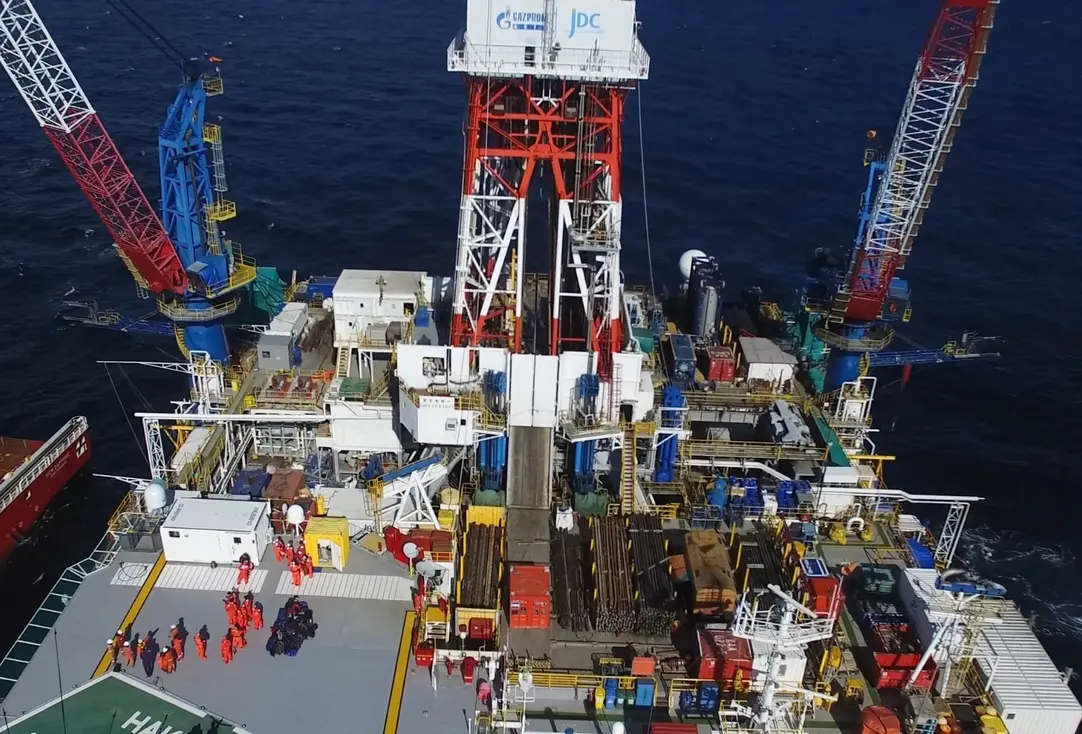
Why Offshore Oil Platform Safety Is a Different Game Entirely
Offshore oil platforms are not just workplaces; they are self-contained industrial ecosystems operating in some of the most hostile environments on Earth. Unlike onshore facilities, offshore platforms sit miles away from emergency services, exposed to unpredictable weather, corrosive marine conditions, and complex process hazards involving hydrocarbons under extreme pressure and temperature.
What makes offshore operations uniquely dangerous is not a single hazard, but the convergence of multiple high-risk factors happening simultaneously. Heavy lifting operations may occur next to hot work activities, while confined spaces, helicopter movements, and marine traffic operate in parallel. Add human fatigue, long rotations, and isolation from family, and you begin to understand why offshore safety requires a fundamentally different approach.
Managing safety offshore is not about eliminating risk—that’s impossible. Instead, it’s about controlling risk intelligently, anticipating failure, and designing systems that remain resilient even when things go wrong.
This article goes beyond regulatory checklists. It focuses on how offshore safety actually works in real life, combining engineering controls, human factors, leadership behavior, and operational discipline. You’ll also find unique safety insights drawn from practical offshore realities—insights rarely captured in generic safety manuals or online articles.
Whether you’re a safety professional, offshore engineer, operations manager, researcher, or student, this guide is designed to give you clarity, depth, and practical understanding of how high-risk offshore operations are managed safely.
1. Understanding High-Risk Operations on Offshore Oil Platforms
High-risk operations offshore are defined not just by what is being done, but by where, how, and under what conditions the work occurs. Offshore platforms combine industrial hazards with environmental and logistical risks that amplify consequences when controls fail.
At the core are process safety risks. Offshore platforms handle large volumes of flammable hydrocarbons under pressure. A minor leak can escalate rapidly into fire or explosion if gas detection, ventilation, or ignition control systems fail. Unlike onshore plants, escape routes are limited, making early detection and prevention critical.
Next are physical and mechanical hazards. Heavy lifting using cranes, simultaneous operations (SIMOPS), working at height over open water, and rotating machinery create constant exposure to serious injury risks. Dropped objects alone account for a significant percentage of offshore fatalities worldwide.
Then comes the environmental risk layer. Offshore platforms face storms, high winds, strong currents, and corrosive saltwater. Equipment degrades faster. Access to medical evacuation depends on weather conditions. A storm can turn a routine task into a life-threatening situation within hours.
Finally, human and organizational risks play a massive role. Long shifts, night work, disrupted sleep cycles, cultural differences in multinational crews, and pressure to maintain production all increase the likelihood of error. Importantly, many offshore incidents are not caused by lack of rules—but by conflicting priorities, poor communication, or fatigue-driven decisions.
A key insight often missed online is this: offshore risk is cumulative, not isolated. A single hazard rarely causes an incident. Accidents happen when multiple small weaknesses align—what safety professionals call “latent failures.”
Read Also: PPE Fit Testing and Practical Usage: A Complete Practical Guide for Workplace Safety
Effective offshore safety management starts with acknowledging this reality and designing systems that assume human error will occur, equipment will degrade, and conditions will change unexpectedly.
2. Safety Culture Offshore: Why Attitude Often Matters More Than Equipment
Safety culture offshore is not a slogan on a notice board—it’s the invisible force that determines how people behave when no one is watching. In offshore environments, where supervision cannot cover every task and conditions change rapidly, culture becomes a primary safety control.
A strong offshore safety culture is one where:
-
Workers feel psychologically safe to speak up
-
Supervisors respond to concerns without blame
-
Safety is treated as an operational requirement, not an obstacle
One of the biggest cultural challenges offshore is production pressure. When downtime costs millions, subtle signals may be sent—intentionally or not—that safety procedures should be “worked around.” This is where incidents begin.
A unique insight rarely discussed is the concept of “silent compliance.” Offshore workers may follow procedures outwardly, but internally believe the rules are unrealistic. Over time, this creates procedural drift, where shortcuts become normalized. Management may believe the system is working—until it suddenly isn’t.
Effective offshore platforms counter this by closing the gap between work-as-imagined and work-as-done. This means involving frontline workers in developing procedures, not just enforcing them. When workers see their experience reflected in procedures, compliance becomes genuine.
Stop Work Authority (SWA) is often cited as proof of good safety culture, but its effectiveness depends on how leadership responds. Platforms with mature cultures don’t just allow SWA—they publicly reinforce and reward it, even when no hazard is ultimately found.
Another overlooked factor is micro-leadership. Offshore safety is influenced more by the behavior of supervisors and foremen than by senior executives. When frontline leaders consistently wear PPE correctly, challenge unsafe acts respectfully, and prioritize safety discussions, culture strengthens organically.
In offshore operations, culture is the safety net beneath every control system. When equipment fails or procedures fall short, culture is what determines whether people adapt safely—or dangerously.
3. Risk Assessment Offshore: Moving Beyond Paper Compliance
Risk assessment offshore is often misunderstood as a documentation exercise. In reality, it is a dynamic decision-making tool that should guide every phase of offshore work—from planning to execution.
Traditional tools such as Job Safety Analysis (JSA), Task Risk Assessment (TRA), and HAZOP studies are widely used. However, many offshore incidents occur despite completed risk assessments, highlighting a critical gap between theory and practice.
One major issue is risk normalization. When workers perform the same hazardous task repeatedly without incident, perceived risk drops—even if actual risk remains high. Over time, assessments become generic, reused, and disconnected from reality.
A practical offshore approach is to treat risk assessment as a conversation, not a form. The most effective platforms conduct JSAs as interactive discussions at the job site, not during office hours earlier. This allows teams to identify real-time hazards such as changing weather, equipment condition, or nearby SIMOPS.
A unique and powerful concept is Impact-Strata Risk Thinking. Instead of assessing only the likelihood and severity of injury, offshore teams evaluate:
-
Impact on personnel
-
Impact on process integrity
-
Impact on the environment
-
Impact on platform evacuation and emergency response
This layered thinking reveals hidden priorities. For example, a low-likelihood valve failure may have catastrophic evacuation implications offshore, making it a higher priority than its injury risk alone suggests.
Another advanced practice is risk ownership clarity. Each identified risk should have a named owner—not “the company” or “the team.” Ownership creates accountability and faster action.
Effective offshore risk assessment is iterative. It evolves as work progresses, conditions change, and new information emerges. Platforms that treat risk assessments as living tools consistently outperform those that treat them as compliance artifacts.
4. Engineering Controls: Designing Safety into Offshore Systems
Engineering controls are the backbone of offshore safety because they do not rely on human behavior to function correctly. When designed, installed, and maintained properly, they prevent incidents before workers are even aware of the hazard.
Key engineering controls offshore include blowout preventers (BOPs), emergency shutdown systems (ESD), fire and gas detection, ventilation systems, and structural integrity protections. These systems exist to control catastrophic events that administrative controls cannot manage alone.
However, one critical offshore reality is that engineering controls are only as reliable as their maintenance regimes. Saltwater corrosion, vibration, and extreme weather degrade equipment faster offshore than on land. Failures often occur not due to design flaws, but due to deferred maintenance or poor testing.
A unique offshore insight is the importance of functional testing under realistic conditions. Many systems pass tests during calm conditions but fail during storms or high-load operations. Progressive platforms conduct stress-based testing that mimics real operational extremes.
Another overlooked area is alarm management. Offshore control rooms can generate thousands of alarms, leading to alarm fatigue. Poorly prioritized alarms cause operators to miss critical warnings. Leading platforms rationalize alarms aggressively, ensuring only actionable alerts remain.
Engineering safety offshore also includes layout design. Poor equipment spacing, congested walkways, and unclear escape routes increase injury risk during emergencies. Retrofitting older platforms with improved human-centered design has shown measurable safety improvements.
Ultimately, engineering controls should be designed with one assumption in mind: humans will make mistakes. The goal is not to eliminate error, but to ensure that errors do not escalate into disasters.
5. Human Factors and Fatigue: The Hidden Risk Offshore
Human factors are one of the most underestimated risks offshore, yet they play a role in nearly every major incident. Fatigue, stress, cognitive overload, and communication breakdowns silently erode safety margins.
Offshore rotations often involve 12-hour shifts for weeks at a time. While workers adapt physically, cognitive performance declines over prolonged periods—especially during night shifts. Reaction time slows, situational awareness drops, and decision-making becomes rigid.
A critical insight rarely addressed online is “functional fatigue.” Workers may not feel tired, yet their ability to process complex information is impaired. This is particularly dangerous during abnormal situations requiring quick judgment.
Leading offshore operators manage fatigue proactively through:
-
Task rotation during high-risk activities
-
Strategic scheduling of critical operations during peak alertness periods
-
Controlled overtime policies
Training also plays a role. Simulation-based training exposes workers to emergency scenarios under stress, helping them build mental models for real events. Platforms that integrate biometric feedback into training gain a deeper understanding of stress responses.
Communication is another human factor challenge. Multinational crews may share a common working language but interpret risk differently based on cultural background. Effective offshore platforms standardize safety language and encourage clarification without stigma.
Read Also: What Are the Best Workplace Injury Insurance Providers in the US?
Human factors management offshore is about designing systems that support human limitations instead of ignoring them. When people are treated as assets to be supported—not liabilities to be controlled—safety outcomes improve dramatically.
6. Emergency Preparedness: Planning for the Worst Offshore
Emergency preparedness offshore is not about having a plan—it’s about having a plan that works when everything else fails. Offshore emergencies escalate rapidly, and response windows are short.
Fire, explosion, loss of well control, helicopter incidents, and severe weather events demand immediate, coordinated action. Evacuation options are limited, and external help may be hours away.
Effective offshore emergency planning focuses on simplicity under stress. Complex procedures that work on paper often fail during real emergencies. Leading platforms design emergency actions that can be executed even under panic, darkness, or smoke.
Drills are essential, but their quality matters more than frequency. Predictable drills train compliance, not resilience. Advanced platforms introduce unexpected variables—missing personnel, blocked exits, communication failures—to build adaptive response capability.
A unique best practice is decision threshold pre-definition. Before emergencies occur, leaders define clear thresholds for escalation and evacuation. This removes hesitation during real events and prevents dangerous delays caused by uncertainty.
Emergency preparedness offshore is ultimately about buying time—time to escape, time to stabilize, time to survive. Platforms that treat emergency planning as a living system consistently outperform those that rely on static manuals.
Conclusion: Offshore Safety Is a System, Not a Single Control
Managing high-risk operations on offshore oil platforms requires more than rules, equipment, or training alone. It demands an integrated safety system where engineering, human factors, leadership, and culture reinforce each other.
The most effective offshore platforms accept that:
-
Risk cannot be eliminated
-
Human error is inevitable
-
Systems must be designed for failure, not perfection
When safety is embedded into design, planning, leadership behavior, and daily decision-making, offshore operations become not just compliant—but resilient.
Safety offshore is not about luck. It is about discipline, humility, and continuous learning.

A seasoned Health and Safety Consultant with over a decade of hands-on experience in Occupational Health and Safety, UBONG EDET brings unmatched expertise in health and safety management, hazard prevention, emergency response planning, and workplace risk control. With a strong passion for training and coaching, he has empowered professionals and organizations to build safer, more compliant work environments.
Certified in globally recognized programs including NEBOSH, ISO standards, and OSHA regulations, he combines technical know-how with practical strategies to drive health and safety excellence across industries. designing comprehensive HSE management systems or delivering impactful safety training, whether he] is committed to promoting a culture of safety and continuous improvement.