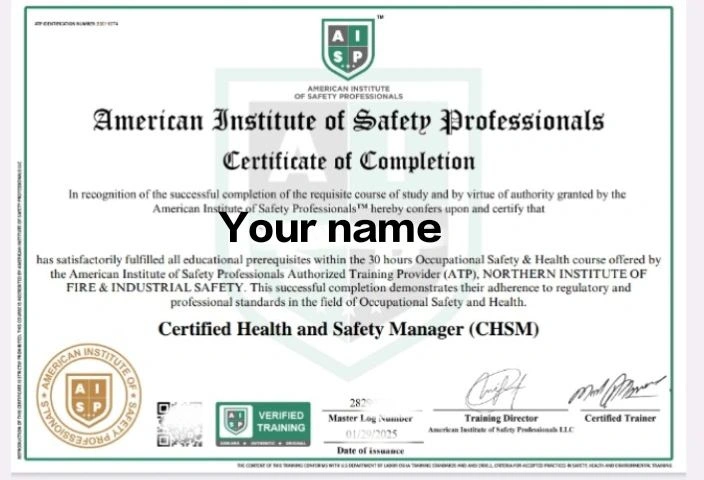
In today’s competitive workplace environment, organizations are increasingly committed to workplace health, safety, and well-being. One of the most respected professional credentials in occupational health and safety is the Certified Health and Safety Manager (CHSM) certification. This credential represents a benchmark of competence for professionals responsible for designing, implementing, and managing safety programs across industries. This article explores in depth what the CHSM certification is, where it is relevant, the benefits of being certified, and how you can get certified.
What Is the Certified Health and Safety Manager (CHSM) Certification?
The Certified Health and Safety Manager (CHSM) certification is a professional designation designed for individuals who lead and manage health and safety programs within various workplaces. Unlike entry-level certifications that focus solely on basic safety practices, the CHSM targets professionals with more advanced responsibilities — especially those tasked with developing strategic safety initiatives, ensuring regulatory compliance, and embedding safety culture into organizational practices.
At its core, the CHSM credential validates an individual’s ability to identify hazards, assess risks, develop and deliver safety training, influence leadership on safety decisions, and use data to improve safety outcomes. It also demonstrates mastery of health and safety standards, best practices, and legal requirements relevant to workplace environments.
This certification is typically awarded by recognized professional bodies or safety institutes that set global or regional standards for occupational health and safety competence. Each CHSM program establishes eligibility criteria, an examination process, and continuing education requirements to maintain the credential. These core components ensure that certified professionals not only demonstrate current knowledge but also remain updated with evolving safety trends and legislative changes.
Professionals with CHSM certification work in a wide range of sectors — from construction and manufacturing to healthcare, education, logistics, and corporate environments. The focus of the certification includes (but is not limited to) hazard recognition, injury and illness prevention, emergency preparedness, occupational health policies, behavioral safety, ergonomics, incident investigation, and performance measurement.
In addition, the CHSM certification serves as a credible statement of expertise for employers, clients, and peers. It reflects a commitment to ethical safety management, professional growth, and continuous improvement. Many employers now view professional certifications like the CHSM as differentiators when recruiting safety professionals or promoting current employees into leadership roles.
Overall, the CHSM is more than a title — it’s a recognized standard that aligns professional practice with measurable outcomes, helping organizations create safer, healthier, and more compliant workplaces.
Where Is the CHSM Certification Relevant?
The relevance of the Certified Health and Safety Manager (CHSM) certification extends across global industries, but its impact varies depending on local regulatory requirements, industry standards, and organizational expectations. Essentially, CHSM is highly relevant in any environment where occupational health and safety (OHS) is central to operations — and this is true in developed and emerging markets alike.
Global and Regional Relevance
In North America (including the United States and Canada), certified safety professionals are often required or strongly preferred for senior safety roles. Many organizations align their health and safety practices with frameworks like OSHA (Occupational Safety and Health Administration) standards in the U.S. or CSA (Canadian Standards Association) safety guidelines. A CHSM certification can support compliance with these frameworks, demonstrating that a professional has the skills to implement and maintain effective safety systems.
In Europe, CHSM fits into a broader context of health and safety compliance driven by national regulations and EU directives. Employers often seek qualified safety managers to implement safety management systems aligned with ISO 45001 (International Standard for Occupational Health and Safety). The CHSM credential complements ISO 45001 responsibilities by validating knowledge in risk assessment, legal compliance, and performance monitoring.
In Africa, Asia, Australia, and the Middle East, rapid industrial growth, infrastructure development, and increased attention to worker welfare have created demand for skilled safety managers. Countries with strong regulatory frameworks — such as South Africa, Saudi Arabia, and Australia — value safety certifications that ensure professionals can address compliance challenges and protect workers effectively. In regions where regulatory oversight is still evolving, CHSM professionals often lead the charge in helping organizations adopt international safety best practices.
Industry Relevance
The CHSM certification is relevant across a wide range of industries, including:
-
Construction and Engineering: One of the highest-risk sectors globally, where safety management directly impacts injury rates, compliance, and project success.
-
Manufacturing: Professionals with CHSM skills help prevent machine-related accidents, chemical exposure, and ergonomic injuries.
-
Oil, Gas, and Energy: In industries with significant hazard exposure, CHSM holders implement systems that reduce risk and improve emergency response readiness.
-
Healthcare: Safety managers help mitigate biological hazards, workplace violence risks, and ergonomic concerns.
-
Transportation and Logistics: Safety management supports accident prevention, regulatory compliance, and fleet safety protocols.
-
Corporate and Administrative: Even offices benefit from improved ergonomics, emergency preparedness programs, and health promotion initiatives.
Organizational Relevance
The CHSM certification is especially relevant for roles such as:
-
Health & Safety Manager
-
Safety Director
-
EHS (Environmental, Health, and Safety) Manager
-
Risk and Compliance Specialist
-
Workplace Safety Consultant
-
Safety Training Coordinator
-
Site Safety Superintendent
Organizations that adopt CHSM standards often see improved safety performance, reduced incident rates, enhanced reputation, and better regulatory audit outcomes. These advantages make the certification relevant not just for individual career growth but also for organizational sustainability and risk management.
In summary, the CHSM certification is relevant virtually worldwide and across industries where safety and risk control are priorities. Whether in highly regulated markets or emerging industrial economies, a CHSM credential positions professionals to lead effective safety programs that protect people, assets, and organizational success.
Benefits of Being Certified as a Health and Safety Manager (CHSM)
Earning the Certified Health and Safety Manager (CHSM) credential carries significant advantages for professionals, employers, and workplaces. This section explores the full range of benefits — from career growth to improved organizational outcomes.
1. Enhanced Professional Credibility
A CHSM certification signals to employers, peers, and clients that you possess validated expertise in health and safety management. This external recognition helps differentiate you from non-certified professionals. Employers often prefer or require CHSM when recruiting safety leaders because it demonstrates that you have mastered relevant standards, systems, and practices.
2. Stronger Career Prospects
Certified safety professionals typically enjoy better job opportunities, higher salaries, and faster career progression. Many organizations prioritize certification during promotions, especially for supervisory or leadership roles. In competitive job markets, CHSM can be the deciding factor that helps you secure advanced roles such as Safety Director, EHS Manager, or Head of Risk Management.
3. Deep Knowledge and Practical Skills
The certification process equips candidates with advanced competencies — such as risk assessment, safety program development, legal compliance interpretation, incident investigation, and performance metrics. These skills directly support your ability to design and implement effective safety strategies that reduce workplace hazards and create healthier environments.
4. Influence in Organizational Decision-Making
As a certified health and safety manager, you gain the confidence and credibility to influence senior leadership decisions. Organizations increasingly recognize that effective safety systems contribute to productivity, financial performance, and reputation. CHSM professionals are better positioned to advocate for necessary resources, safety technologies, and cultural changes needed to achieve strategic goals.
5. Compliance with Legal and Regulatory Frameworks
Workplace safety is not optional — it’s often mandated by law. CHSM certification helps professionals interpret and apply complex legal requirements consistently. Whether dealing with OSHA, ISO 45001 guidelines, or country-specific safety standards, certified managers ensure that their organizations maintain compliance, avoid fines, and successfully pass audits.
6. A Strong Network of Peers and Resources
Many issuing bodies offer access to professional communities, continuing education resources, conferences, and knowledge libraries. These networks create opportunities for ongoing learning, mentorship, and collaboration. Staying connected with fellow CHSM holders keeps you updated on emerging trends, new regulations, and innovative practices.
7. Impact on Workplace Culture
Safety is more than policies — it’s culture. Certified professionals often become champions of safety culture, encouraging employee engagement, training participation, and proactive hazard reporting. A strong safety culture yields measurable impacts such as lower incident rates, reduced absenteeism, improved morale, and higher productivity.
8. Return on Investment for Employers
Employers benefit when they have certified health and safety managers on staff. Organizations with competent safety leadership often experience fewer accidents, lower insurance premiums, reduced workers’ compensation claims, and improved operational efficiency. These outcomes contribute to long-term financial savings and sustainable business performance.
9. Personal Satisfaction and Professional Confidence
Finally, certification brings personal fulfillment. Knowing that you have met rigorous standards and earned recognition for your expertise builds confidence. CHSM professionals often report greater job satisfaction because they see the positive impact of their work on employee well-being and organizational success.
In summary, being certified as a health and safety manager (CHSM) goes far beyond a title. It elevates your professional standing, expands your skillset, supports organizational success, and positions you for long-term career growth. For anyone serious about leading in occupational safety, the certification is a powerful asset.
How to Get Certified as a Certified Health and Safety Manager (CHSM)
Achieving the Certified Health and Safety Manager (CHSM) certification requires a combination of education, experience, preparation, and successful examination performance. While specific requirements may vary among issuing bodies, the general process follows several key stages.
1. Understand Eligibility Requirements
Before applying, you need to determine whether you meet the eligibility standards for the CHSM certification. Most organizations require:
-
Educational Background: A high school diploma is usually the minimum; however, many candidates hold college degrees in occupational safety, engineering, environmental health, or related fields. Some bodies prefer or require a bachelor’s degree.
-
Work Experience: Most CHSM programs require a minimum number of years working in health and safety roles — typically between 3 to 5 years of relevant professional experience in safety management or EHS roles.
-
Professional References: You may be asked to provide references from supervisors or managers who can validate your experience in health and safety functions.
Eligibility criteria are designed to ensure that candidates have real-world experience applying safety principles in workplace settings before pursuing advanced certification.
2. Apply for the Certification
Once you confirm eligibility, you submit an application to the certifying organization. This typically includes:
-
A completed application form
-
Proof of education (transcripts or diplomas)
-
Documentation of work experience (CV, employer letters)
-
Payment of application fees
Scores and timelines vary by provider, but once approved, you receive confirmation of eligibility to sit for the CHSM exam.
3. Prepare for the Examination
Preparation is one of the most important steps in earning the CHSM credential. The certification exam is designed to assess your understanding of health and safety management principles, legal frameworks, risk control strategies, and practical implementation skills.
Preparation strategies include:
-
Official Study Materials: Many certifying bodies provide study guides, reference manuals, and practice exams.
-
Training Courses: Live workshops, online bootcamps, and instructor-led training can accelerate learning and deepen your knowledge.
-
Peer Study Groups: Learning with peers or mentors helps reinforce concepts and expose you to varied perspectives.
-
Review of Standards: Familiarize yourself with safety standards such as OSHA regulations, ISO 45001 requirements, and industry best practices.
A well-planned study schedule increases your confidence and maximizes your chances of certification success.
4. Pass the CHSM Examination
The CHSM examination typically consists of multiple-choice questions that evaluate your knowledge and application of key safety management concepts. The exam format, length, and passing score differ by organization, but most exams emphasize:
-
Hazard identification and risk assessment
-
Safety leadership and culture development
-
Legal compliance and ethical considerations
-
Incident investigation and corrective actions
-
Performance measurement and continuous improvement
Read Also: Who Is Responsible for Enforcing Fire Safety?
Some organizations may offer computer-based exams at testing centers or remote proctoring options.
5. Maintain and Renew Certification
Earning the CHSM credential is not the final step — maintaining it is equally important. Most certifications require continuing education units (CEUs) or professional development credits to renew your status every few years (often every 3 years).
Ways to earn CEUs include:
-
Attending safety conferences or seminars
-
Participating in workshops or online courses
-
Publishing articles or research in safety journals
-
Teaching or mentoring safety professionals
Renewal keeps your certification active, current, and aligned with evolving safety standards.
6. Leverage Your Certification for Career Growth
After certification, strategically use your CHSM credential to advance your career. Highlight it on your resume, LinkedIn profile, and professional bios. Seek roles that leverage your knowledge in safety leadership, risk management, compliance audits, and organizational safety strategy. Engage with professional safety associations and attend networking events to broaden your influence.
Conclusion
The Certified Health and Safety Manager (CHSM) certification is a powerful credential for professionals dedicated to advancing workplace safety and health. It signifies advanced competence in managing safety programs, interpreting regulations, fostering culture change, and driving continuous improvement. Whether your goal is career advancement, expanded professional credibility, or contributing meaningfully to safer work environments, CHSM offers tangible benefits for individuals and organizations alike.
As industries continue to prioritize safety and regulatory compliance, CHSM certification remains a strategic investment — one that enhances your knowledge, elevates your professional status, and equips you to lead with confidence in any work setting that values health, safety, and well-being.

A seasoned Health and Safety Consultant with over a decade of hands-on experience in Occupational Health and Safety, UBONG EDET brings unmatched expertise in health and safety management, hazard prevention, emergency response planning, and workplace risk control. With a strong passion for training and coaching, he has empowered professionals and organizations to build safer, more compliant work environments.
Certified in globally recognized programs including NEBOSH, ISO standards, and OSHA regulations, he combines technical know-how with practical strategies to drive health and safety excellence across industries. designing comprehensive HSE management systems or delivering impactful safety training, whether he] is committed to promoting a culture of safety and continuous improvement.